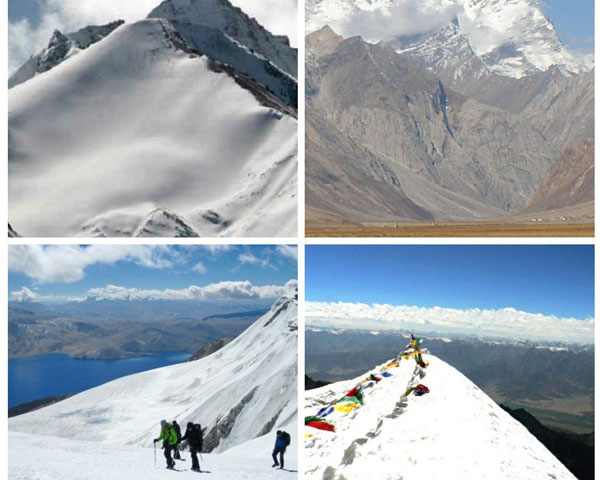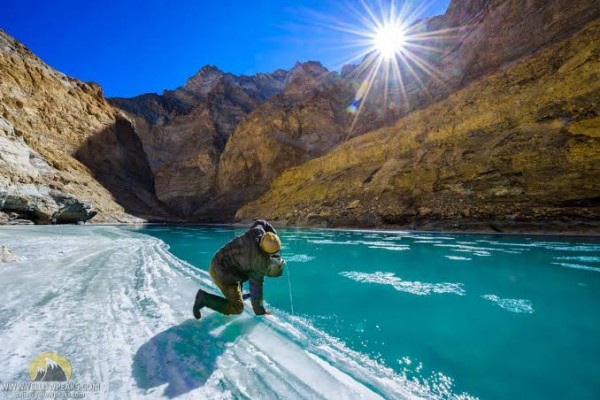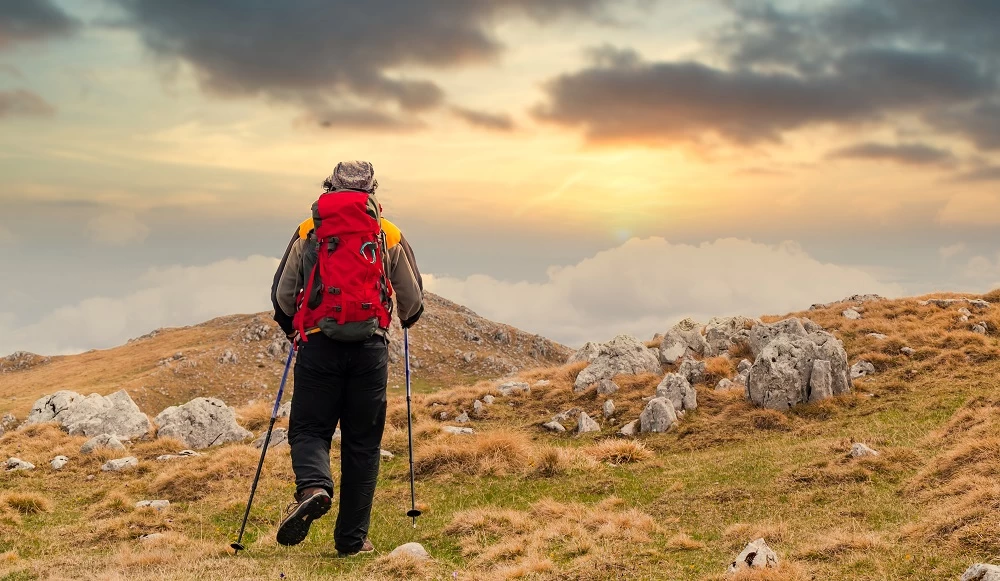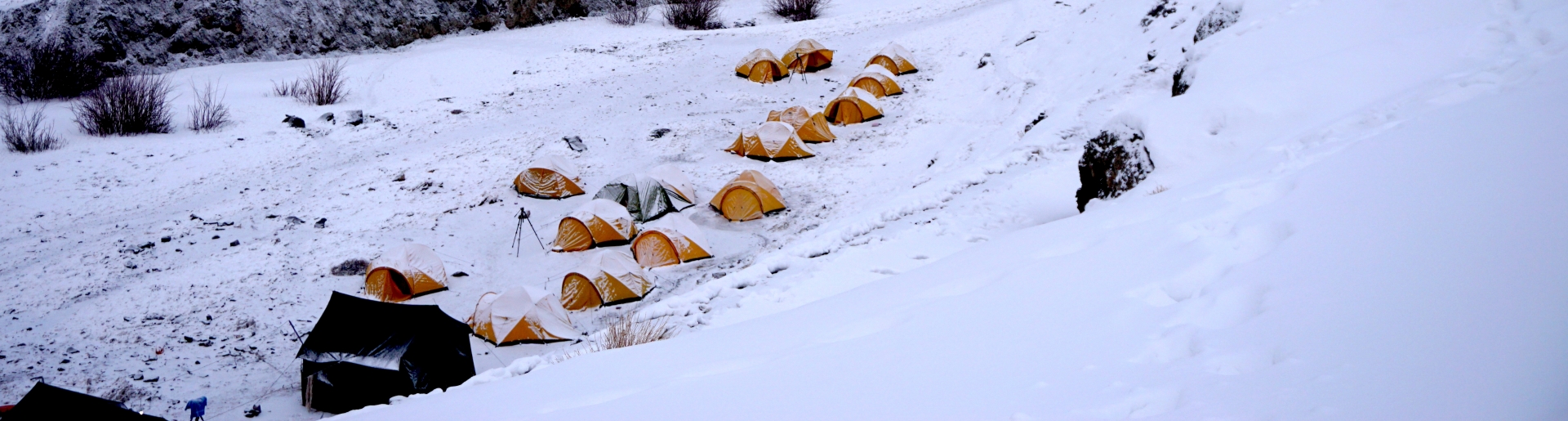
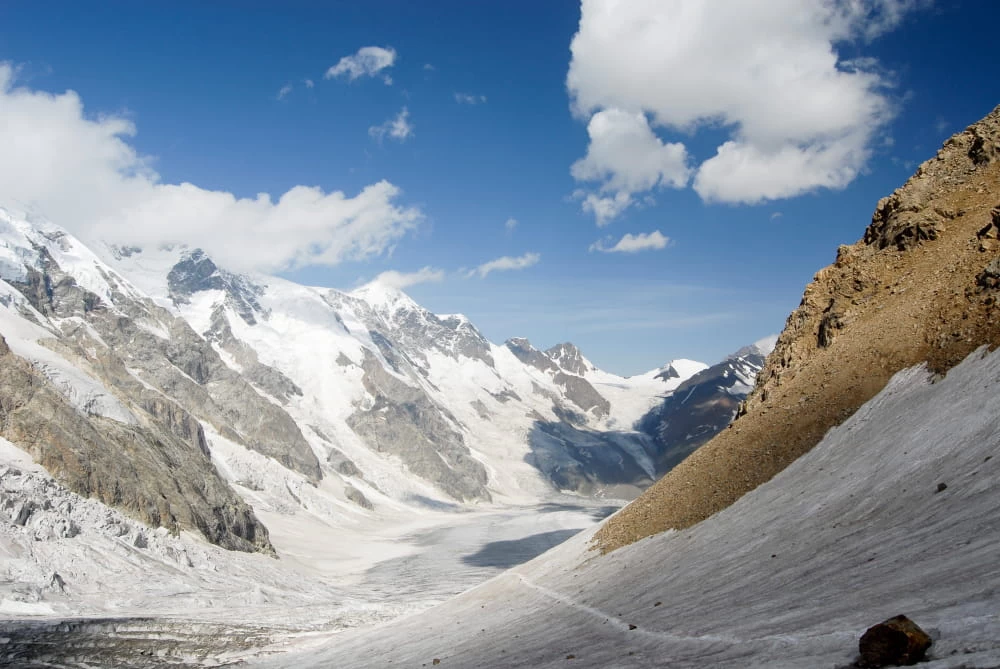
Ladakh is known for its high passes, dry valleys and dramatic mountain scenery, but there is another side to the region that demands much more preparation. Mountaineering in Ladakh takes climbers beyond regular trekking routes and into high-altitude terrain where weather, technical ability, acclimatization and route planning all matter.
The region has climbing objectives at different elevations and difficulty levels. Peaks such as Stok Kangri, Go-Leb Kangri, Mentok Kangri, Matho West and Kangyatse offer shorter expeditions, while Mount Kun and Mount Nun require much longer expedition schedules and considerably more experience. Overland Escape currently lists these peaks among its Ladakh mountaineering options.
The right peak is not necessarily the highest one. It is the one that matches your experience, preparation, and ability to handle the conditions.
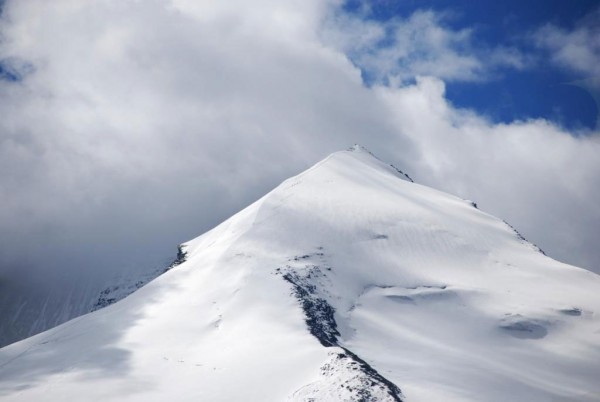
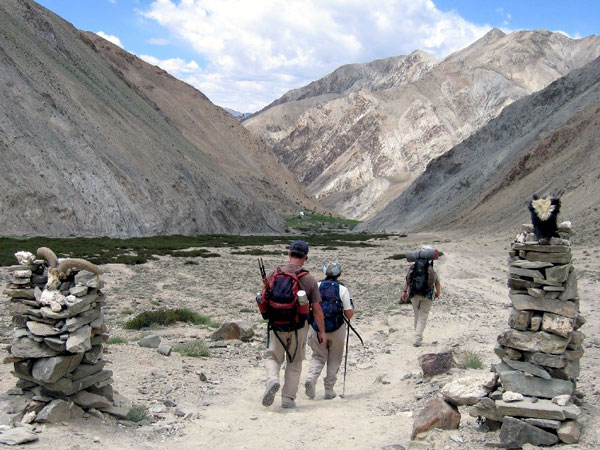
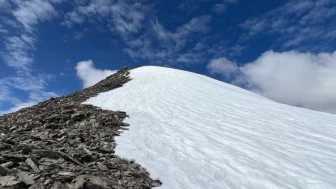
Ladakh combines high altitude with a dry, rugged landscape. A climb can involve rocky approaches, steep slopes, snow, glaciers, loose terrain, and exposed sections depending on the mountain and route.
Altitude is another major factor. Leh itself sits at a high elevation, so acclimatization needs to be part of the expedition rather than an afterthought. Overland Escape recommends spending adequate time acclimatizing in Leh before attempting peaks such as Stok Kangri.
The climbing season is also limited. The exact window varies by peak, but several Overland Escape routes fall between June and September, while Mentok Kangri is listed with a longer mid-July to mid-October season.
This combination makes preparation particularly important. Strong trekking ability does not automatically translate into readiness for a technical summit.
Stok Kangri is one of the better-known climbing objectives close to Leh. Overland Escape lists the peak at 6,140 metres and a 4-night, 5-day itinerary. The northern approach is described as the shorter route, but climbers still need sufficient acclimatization before beginning the ascent. The listed climbing season is June to September.
Its location near Leh makes the logistics relatively straightforward compared with remote expeditions. That does not mean the altitude should be underestimated.
A climber needs to be comfortable with sustained effort at high elevation and should follow the expedition team's advice about acclimatization and summit timing.
Stok Kangri can therefore be an interesting objective for someone moving from high-altitude trekking towards mountaineering, provided the route and current access conditions are suitable.
Go-Leb Kangri rises to about 6,120 metres and is another peak located relatively close to Leh. The current Overland Escape listing gives a 4-night, 5-day itinerary and identifies July, August and September as the preferred season.
The final section demands basic mountaineering skills and careful movement on steeper terrain. This distinction matters. A route can feel manageable during the trekking stages and become considerably more demanding near the summit.
Climbers considering Go-Leb Kangri should therefore ask about the technical sections, equipment requirements and level of guide support before booking.
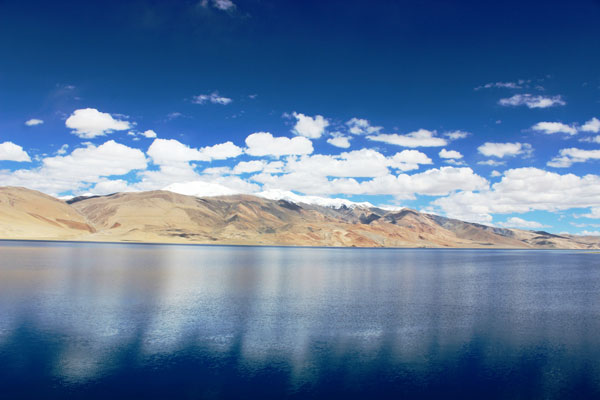
Mentok Kangri stands at approximately 6,227 metres and is located on a long ridge south of Korzok near Tsomoriri Lake. Overland Escape lists the expedition at 4 nights and 5 days, with mid-July to mid-October given as the climbing period.
The setting is a major part of the experience. The Korzok valley and Tsomoriri landscape provide a very different backdrop from the mountains immediately around Leh.
The route is still a high-altitude climbing expedition, though. Climbers should not let the scenery make the objective seem easier than it is. Conditions at the base camp can also be windy and rocky, according to the detailed Mentok Kangri itinerary.
Matho West, also called Matho Kangri, is listed at approximately 6,230 metres. It is located close to Leh, with the route beginning around Martselang near Hemis and finishing towards Stok Village after the summit. Overland Escape lists a 5-night, 6-day itinerary and July to September as the preferred season.
The relatively short expedition duration can make it attractive to climbers working within a limited travel schedule. Still, duration alone does not determine difficulty.
The route involves both trekking and climbing, so preparation should cover endurance as well as basic mountaineering skills.
Kangyatse is among the more prominent mountaineering objectives in the Markha Valley region. Overland Escape lists a 6,200-metre Kangyatse itinerary lasting 5 nights and 6 days, with June to September as the climbing period.
The route offers a combination of mountain scenery and summit climbing, but the term “easier” should always be treated in context. A peak that is comparatively less technical than another objective can still be demanding at more than 6,000 metres.
The adjacent Kangyatse summit is described by Overland Escape as more technical, so climbers should confirm exactly which summit their package covers.
A longer Kangyatse expedition takes the objective to around 6,400 metres. The current Overland Escape listing gives an 8-night, 9-day itinerary combining the Markha Valley approach with the summit attempt. The route includes river crossings, high passes and glaciated valleys.
This is a different proposition from a shorter trekking holiday. The combination of altitude, glacier terrain and a longer itinerary requires better preparation.
Climbers should confirm the technical requirements and equipment list before choosing this expedition.
Spangnak Ri, approached from Rumtse towards Tsomoriri, reaches approximately 6,401 metres. Overland Escape lists this as a 10-night, 11-day expedition. Its remote setting and technical terrain make prior high-altitude climbing experience important.
The Rumtse approach also adds a sense of remoteness to the expedition. Climbers spend more time away from the conveniences available around Leh, so logistics become increasingly important.
Food, camping equipment, luggage support, climbing gear and emergency arrangements should all be discussed before departure.
Mount Kun is a completely different level of expedition. Overland Escape lists the peak at around 7,087 metres and gives a 27-night, 28-day expedition schedule. It lies in the Suru Valley of the Zanskar Himalayas, north of Mount Nun.
The approach is longer and more involved than the shorter 6,000-metre objectives around Leh. Base camp access itself requires a multi-day approach from the listed routes.
An expedition of this length requires substantial preparation. Previous high-altitude experience, technical climbing ability, physical conditioning, and familiarity with prolonged time in expedition conditions become much more important.
Mount Kun should not be approached as an extension of a normal Ladakh trek.
Mount Nun is another major expedition objective in the region, with Overland Escape listing it at 7,135 metres and an expedition duration of around 27 nights and 28 days. The mountain lies in the Zanskar range, and the operator describes it as an objective requiring experienced mountaineers and support staff.
The difference between a 6,000-metre climbing objective and a 7,000-metre expedition is significant. Time at altitude, expedition logistics, technical demands, and weather exposure all increase.
Anyone considering Mount Nun should have relevant high-altitude mountaineering experience rather than treating the expedition as a first introduction to climbing.
The suitable peak depends on your climbing background. A climber with limited mountaineering experience may look at shorter objectives such as Stok Kangri, but suitability still depends on current route conditions, technical requirements, and professional assessment.
Someone with previous technical climbing experience may consider Go-Leb Kangri, Matho West or Kangyatse. Longer objectives such as Spangnak Ri, Mount Kun and Mount Nun require a much higher level of preparation.
Ask these questions before deciding:
The answers matter more than the name of the peak.
Acclimatization is essential during Mountain Climbing in Ladakh because the body needs time to adjust to reduced oxygen availability at high altitude.
Do not rush from Leh straight into a summit attempt. The actual acclimatization schedule should be based on the expedition's elevation profile, route, and professional guidance.
Headache, nausea, dizziness, unusual fatigue and breathlessness can occur with altitude exposure. Severe or worsening symptoms should be taken seriously, and continuing upward is not always the right response.
Overland Escape specifically notes the need for acclimatization in Leh before climbing Stok Kangri, while its current FAQ also identifies acclimatization as vital for Ladakh mountaineering.
Equipment varies from peak to peak. A shorter climbing route and a high-altitude expedition will not require exactly the same kit.
Depending on the route, climbers may need:
Overland Escape lists climbing equipment such as ropes, ice axes and crampons among the inclusions for its mountaineering packages, but the exact equipment supplied can vary by expedition.
Always request the complete equipment list before travelling.
There is no single climbing window for every peak. Overland Escape lists June to September for Stok Kangri and Kangyatse Peak, July to September for Go-Leb Kangri and Matho West, and mid-July to mid-October for Mentok Kangri.
The actual summit window can still depend on weather and route conditions. Wind, snowfall, and changing mountain conditions may affect an expedition even during the stated season.
Build some flexibility into the schedule. A fixed return date can become a problem if the summit attempt needs to be delayed.
Yes. Mountaineering expeditions in Ladakh are subject to a permit framework. Ladakh's 2024 Mountaineering Policy states that registered mountaineering tour operators must obtain a permit for each expedition from the office of the Assistant Director of Tourism, Leh or Kargil. The policy also sets limits on expedition size and different fee categories based on peak elevation and team type.
This is worth checking before booking because permit procedures and requirements can change. The current Overland Escape page also lists permits and related fees among the inclusions for its mountaineering packages. Ask the operator who handles the permit and what documents you need to provide.
Training for Mountain Climbing in Ladakh should begin well before the trip. Build cardiovascular endurance through uphill walking, stair climbing, cycling, or similar activities. Strengthen your legs and core. Longer hikes with a light pack can also make the transition to expedition days easier.
Technical preparation matters just as much. If the chosen route involves crampons, an ice axe, ropes or glacier travel, you should know how to use the equipment safely rather than learning everything on the mountain. Fitness does not replace experience. Neither does enthusiasm.
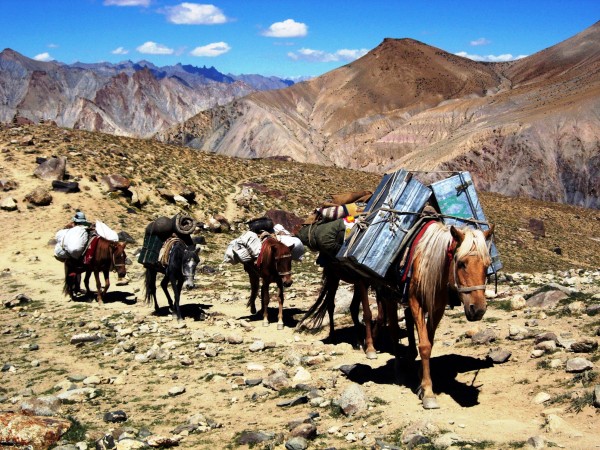
Overland Escape currently offers mountaineering options ranging from shorter 4-night and 5-day objectives to extended 27-night and 28-day Mount Kun and Mount Nun expeditions. The packages can include accommodation, transport, camping arrangements, food, cooks and helpers, guides, horses for luggage, permits or fees, and climbing equipment depending on the selected expedition.
The differences between packages are substantial, so compare them based on the mountain rather than simply the number of days.
Check the itinerary, climbing equipment, guide support, acclimatization schedule, transport, permits and contingency arrangements before confirming a booking.
Ladakh has no shortage of climbing objectives. The real question is which mountain fits your experience.
Stok Kangri, Go-Leb Kangri, Mentok Kangri, Matho West and Kangyatse offer different ways to enter high-altitude mountaineering. Spangnak Ri adds greater remoteness and technical demands, while Mount Kun and Mount Nun move into much longer and more demanding expedition territory.
Consider the mountain’s terrain, remoteness, and level of support before making a final decision. Mountaineering in Ladakh requires enough time for acclimatization and weather delays, so match the objective to your existing climbing experience and preparation.
Popular objectives listed by Overland Escape include Stok Kangri, Go-Leb Kangri, Mentok Kangri, Matho West, Kangyatse, Spangnak Ri, Mount Kun and Mount Nun. They differ considerably in elevation, duration, and technical requirements.
Suitability depends on previous trekking, altitude, and mountaineering experience. Shorter objectives may be considered by climbers with limited experience under professional guidance, but no high-altitude peak should be treated as a casual beginner climb.
Among the expeditions currently listed on its mountaineering page, Mount Nun is listed at 7,135 metres, while Mount Kun is listed at around 7,087 metres.
It depends on the peak. Overland Escape lists shorter 4-night and 5-day expeditions for some objectives, while Mount Kun and Mount Nun are listed as 27-night and 28-day expeditions.
The climbing period varies by peak. Several routes are listed from June to September, while Mentok Kangri is listed from mid-July to mid-October. Weather and route conditions should be checked before the expedition.
Yes. Acclimatization is a key part of high-altitude climbing. The amount of time required depends on the route, elevation, and individual response to altitude.
Yes. Ladakh has a mountaineering expedition permit system. Under the 2024 policy, registered mountaineering tour operators must obtain permits for expeditions through the prescribed process.
Check the peak, elevation, technical difficulty, expedition duration, acclimatization schedule, equipment, guide support, permits, accommodation, transport, emergency arrangements, and costs that are not included.



 Activities